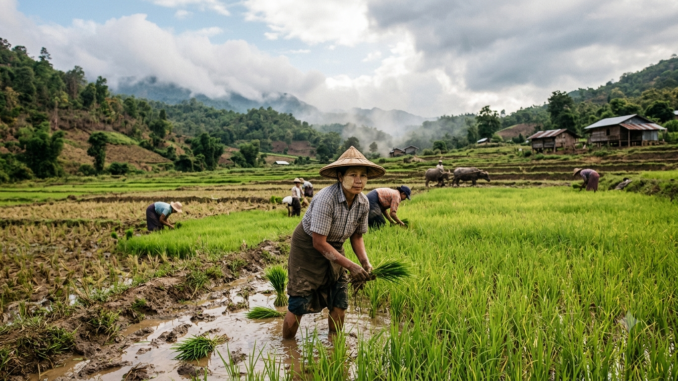
Myanmar’s agricultural sector presents a striking contrast, balancing strong regional export performance against severe domestic and environmental headwinds.
In export markets, commercial crops have seen robust demand. During the first quarter of the 2026–27 fiscal year (April–June), Myanmar exported over 1 million metric tons of pulses, maize, and sesame seeds, generating more than $538 million. Trade with major regional partners—including India, Thailand, and China—remained active, supported by steady pulse demand and strong border trade prior to seasonal import window adjustments.
However, farmers face mounting operational friction at home. Global trade disruptions and energy market volatility have kept diesel and urea fertilizer prices elevated well above prior-year levels. These steep input costs are eroding profit margins, forcing many smallholders to reduce plowed acreage and scale back planting ahead of the monsoon season.
Compounding these economic pressures are severe climate risks and ongoing localized disruptions. Flood warnings in major agricultural zones alongside an impending El Niño drought risk threaten yields during critical growing windows. With high transport costs creating stark regional price differences, maintaining food security remains a delicate balance despite positive export numbers.